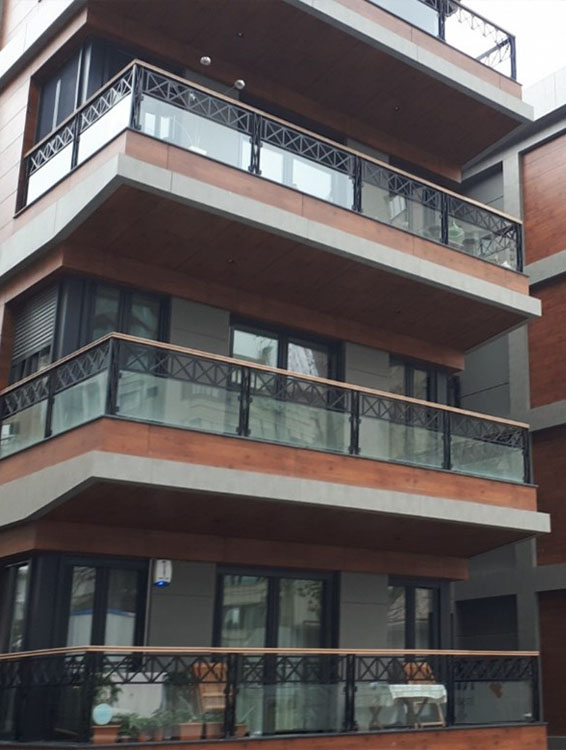
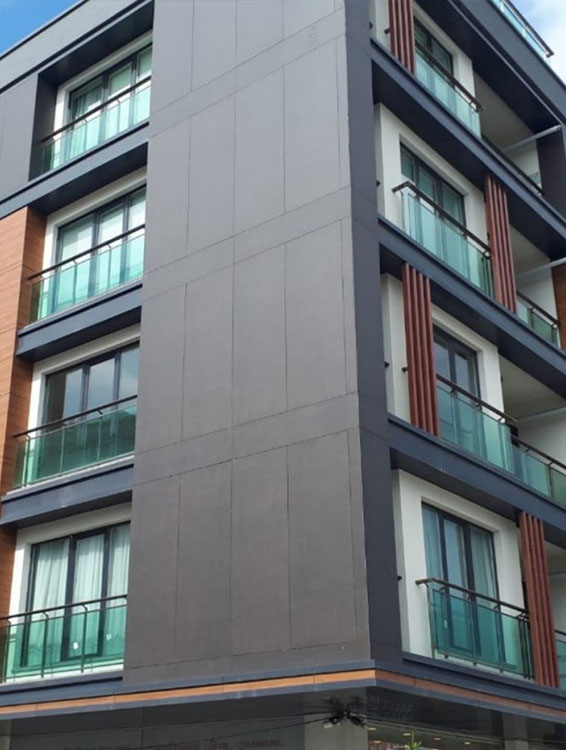
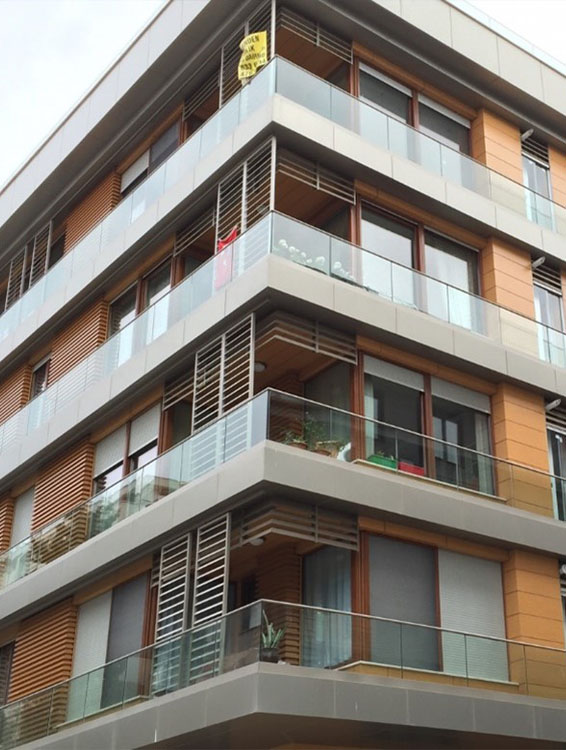
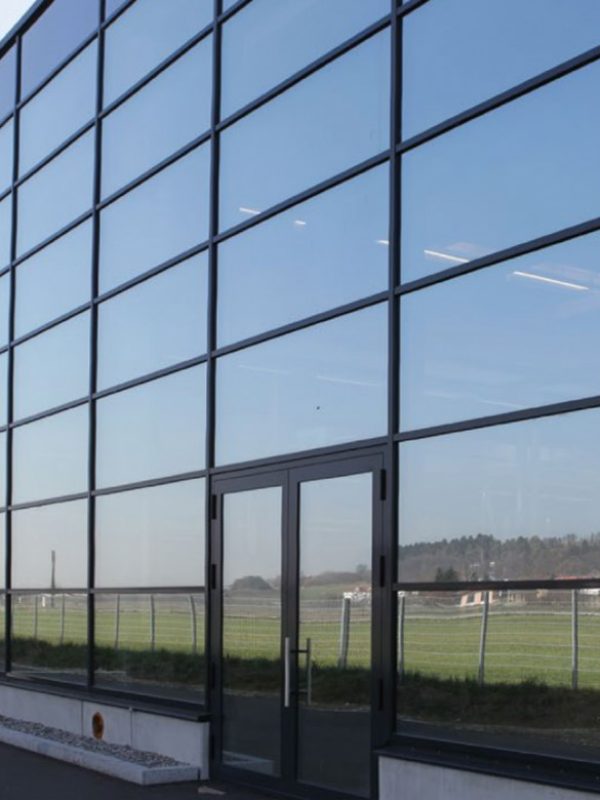
When viewed from the outside, the façade predominantly features a glass surface, alongside a cover profile with varying depths and horizontal and vertical sections 5 cm wide, creating a distinctive architectural appearance.
The glass panes are fixed with a fixing cover by bridging them with EPDM seals on a horizontal and vertical aluminium support structure, and the application is completed with a visual top cover on the fixing covers.
Spandrel areas that should remain concealed, such as flooring, columns and suspended ceilings, which would create an unsightly appearance from the outside, are concealed using enamelled glass or composite panels.
As their presence is not apparent from the outside unless the wings are opened, they are referred to as concealed wings. Outward-opening concealed wings can be incorporated into an automation system as desired, or a motorised mechanism controlled by a button can be used to ensure the wings open and close automatically.
By incorporating acoustic glass into the glazing combination to minimise noise from outside spaces, alongside heat and sun-controlled architectural glazing choices, a high level of living comfort is achieved.
The use of composite panels with at least B1 FR class fire retardant properties and accompanying fire retardant elements with different fire reactions plays an important role in terms of life and building safety, as it enables the implementation of minimum fire safety measures in buildings.
(Important Note: For the façade cladding applications you choose for your structures, request that the necessary fire test be carried out on a mocap sample of the application at independent and accredited testing laboratories and that it passes the test successfully.)
A2 class non-combustible aluminium composite panels are recommended for schools, hospitals and buildings exceeding 21.5 metres in height.